ACTIVITY REPORT
Name of the club: Advanced Robotics
Name of the Activity: Smart Dustbin
Date: 8th August 2026
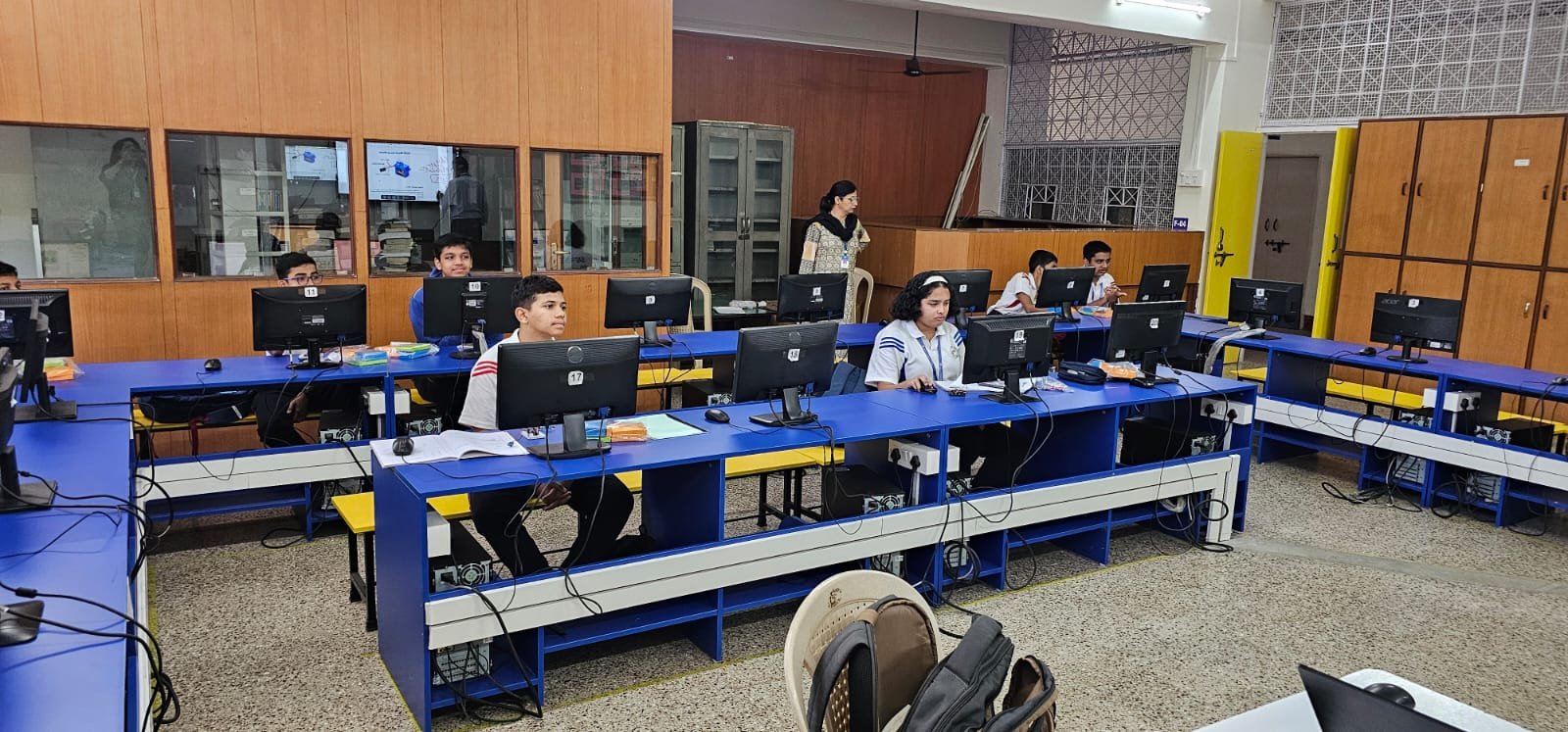
Venue: Computer Lab
Resource Person: Mr. Anil Aher, Founder & Director, TinyBots, an initiative of ES Solutions Pvt. Ltd.
Objective;
To help students understand how an IR sensor and servo motor can be integrated with an Arduino Nano to create an automatic smart dustbin. Students will learn sensor interfacing, servo motor control, breadboard circuit assembly, and Arduino programming while exploring the role of automation in everyday life.
Report of the Activity
he session commenced with a welcome address introducing Mr. Anil Aher, followed by an interactive presentation on embedded systems, automation, and the role of microcontrollers in modern hygiene and smart home solutions.
The practical segment of the workshop was conducted in the following structured phases:
- Component Orientation & Working Principles: Aher explained the functional mechanics of the Arduino Nano microcontroller, Infrared (IR) proximity sensors, and servo motors. Students learned how IR sensors process reflected light to detect obstacles and how Pulse Width Modulation (PWM) signals drive servo motor rotation.
- Circuit Wiring & Hardware Assembly:Participants worked individually and in small teams to construct circuit connections on breadboards. They connected the IR sensor output to the Arduino digital input pins and interfaced the signal, power, and ground pins of the SG90 servo motor.
- Coding & Logic Implementation:Guided by the resource person, students wrote and debugged C/C++ code using the Arduino IDE. The program logic was set to trigger the servo motor to rotate 90° (opening the dustbin lid) upon object detection, hold the state for a 3-second delay, and return to 0° (closing the lid).
- Testing, Calibration, and Troubleshooting:Students uploaded code to their microcontrollers, calibrated IR sensor sensitivity thresholds, and resolved common wiring and code logic errors under the mentorship of Mr. Aher.
The activity ended with a live demonstration of working prototypes and a Q&A session covering real-world IoT applications and career opportunities in robotics.
Learning Outcome
Students will be able to build and program a smart dustbin that opens its lid automatically when an object is detected. They will be able to explain the working of the IR sensor and servo motor, troubleshoot circuit connections, and relate the project to real-world applications of automation, smart homes, and hygiene management.
Conclusion
The “Smart Dustbin” activity was successfully conducted, effectively bridging theoretical electronics with hands-on mechanical and software execution. The interactive nature of the workshop fostered active engagement, problem-solving, and technical confidence among the members of the Advanced Robotics Club. By transforming raw components into a functional automated prototype, students gained vital practical experience that serves as a strong foundation for future robotics and IoT initiatives.